
Islam in India
India has one of the largest Muslim populations in the world, roughly 200 million people, about 14% of the country. Islam arrived and became rooted through trade, conquest, migration, state patronage, Sufi institutions, intermarriage, and conversion. Collapsing those processes into one story is the source of most of the bad arguments about it.
It came first by sea. Arab traders were on the Malabar coast within decades of the Prophet’s death; the Cheraman Juma mosque in Kerala is traditionally dated to the seventh century, which, if accurate, would make it among the oldest mosques in the world.
Political conquest began earlier than the standard north Indian narrative suggests. An Umayyad army under Muhammad bin Qasim conquered Sindh in 711–13, creating the first durable Muslim-ruled territory in South Asia without immediately transforming the religion of most of its population. From the eleventh century, Turkic and Afghan military elites entered the northwest in new waves; the Delhi Sultanate and eventually the Mughal Empire made Indo-Muslim rule a central part of subcontinental politics.
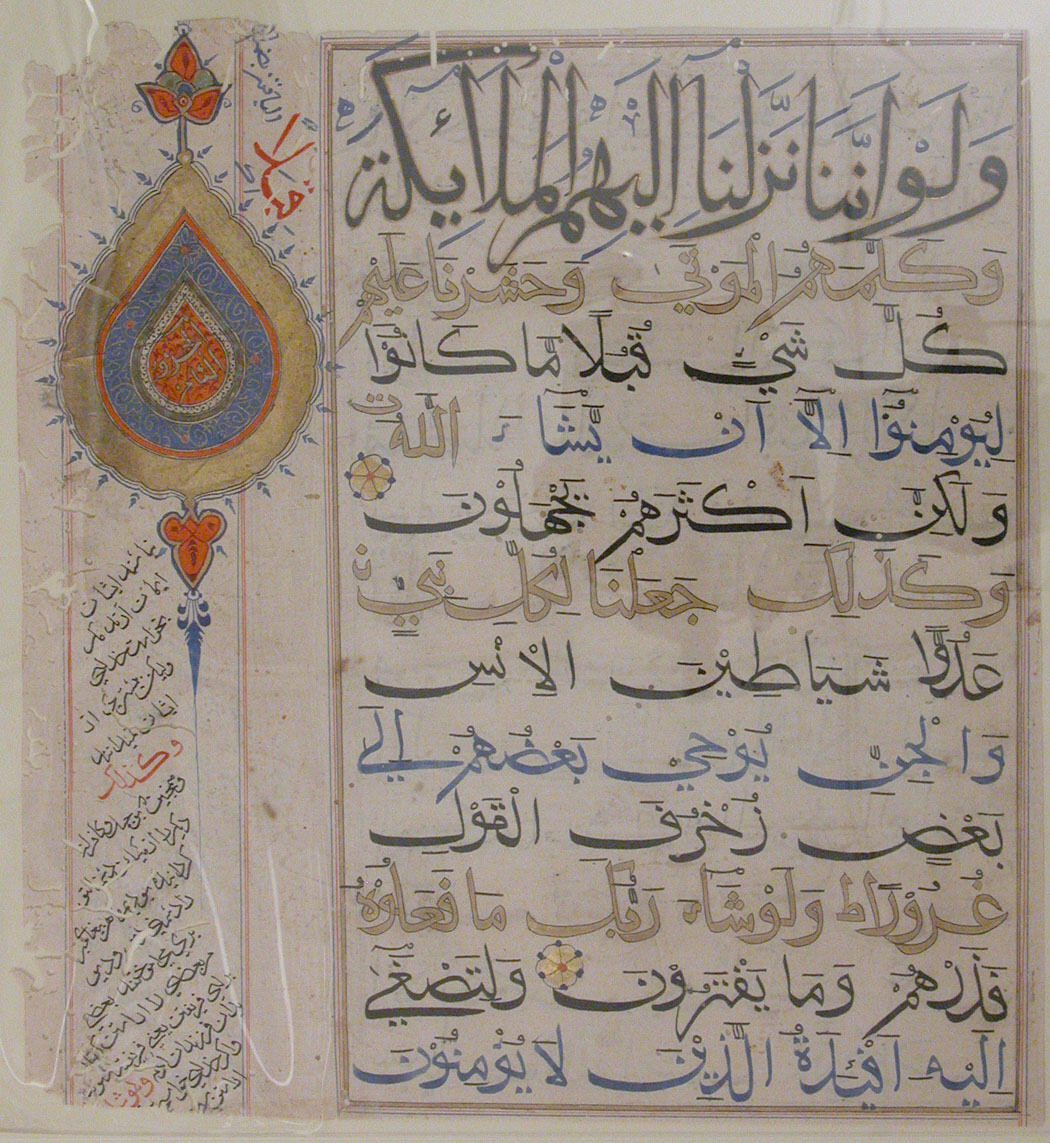
It became demographically rooted through conversion, especially in Bengal and western Punjab, while the imperial heartland around Delhi and Agra never became Muslim-majority. No single explanation works across regions. Agrarian expansion, patronage, intermarriage, Sufi networks, local political change, and movement out of older community hierarchies all mattered in different proportions. Richard Eaton’s work on Bengal shows conversion advancing along a changing agricultural frontier rather than radiating mechanically from the centers of conquest. The evidence does not support either mass conversion by the sword or a frictionless movement motivated only by spiritual appeal.
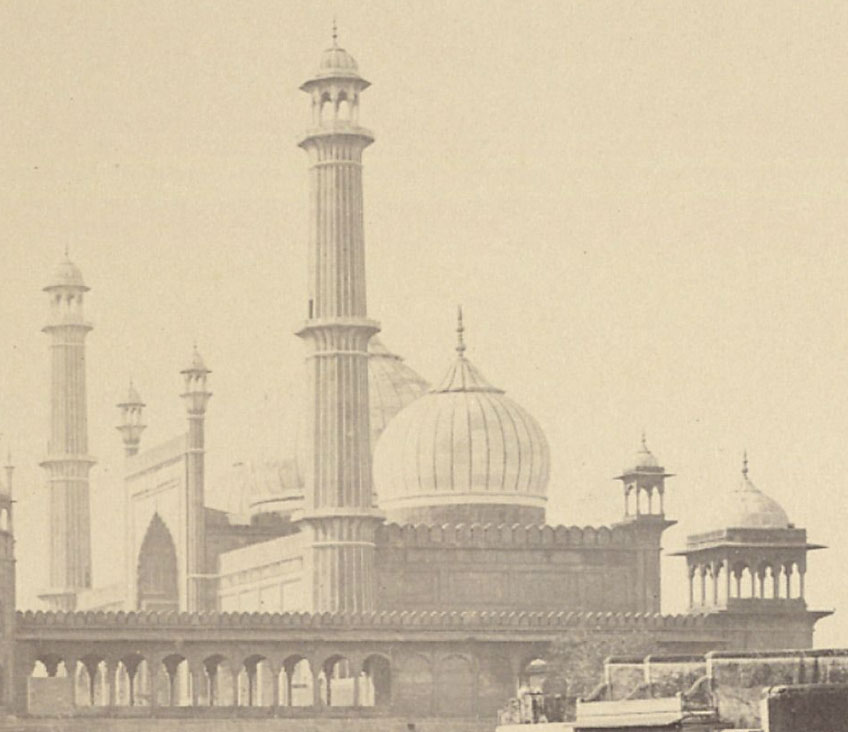
Sufi orders did important religious and institutional work. The Chishtis, above all, established hospices and shrines that drew, and still draw, Hindu and Muslim devotees. Nizamuddin Auliya’s dargah in Delhi and Moinuddin Chishti’s dargah in Ajmer remain among the most visited religious sites in India by people of several faiths. Sufism was not a single tolerant alternative to legalistic Islam; its orders had their own disciplines, scholars, political relationships, and disagreements over music and shrine practice.
What emerged was distinctively Indian: Urdu, developing from the Persian-Hindustani contact of the Sultanate courts into one of the great literary languages; Hindustani classical music, whose lineages run through Muslim families for centuries; Mughal architecture and painting; and a body of syncretic devotional practice that both orthodoxies have periodically tried to stamp out.
Who Indian Muslims are
The population is overwhelmingly Sunni and predominantly Hanafi in legal matters, which were influenced by Central Asian and Persian traditions. Shia communities are substantial and internally varied: Twelver Shia, historically concentrated around Lucknow, where the Awadh nawabs were Shia patrons, and in Hyderabad and Kashmir, and the Ismaili traditions of the Dawoodi Bohras and the Nizari Khojas, both mercantile communities based largely in Gujarat and Mumbai with their own institutions and living leadership. The Ahmadiyya community, which India recognizes as Muslim, is treated as non-Muslim by many Muslim organizations and by law in Pakistan.
Caste traveled into Indian Islam as well, in the widely used distinction between ashraf, families claiming descent from Arab, Persian, Turkic, or Afghan immigrants; ajlaf, occupational communities descended from local converts; and arzal, communities subject to exclusions closely resembling untouchability.. Doctrinally, Islam recognizes none of this. Socially, it governs marriage and standing much as elsewhere in the subcontinent. The Pasmanda movement organizes the large majority of Indian Muslims who are not ashraf, and its argument, that a small upper stratum has dominated the community’s leadership and its public representation, is directed inward as much as outward.
The nineteenth-century reformations
The collapse of Mughal authority and the failure of the 1857 rebellion produced a crisis of authority that generated several competing answers, and every major current in Indian Islam today descends from one of them.
The seminary at Deoband, founded in 1866, rebuilt religious authority around scholarly training, a printed and standardized curriculum, and a network of madrasas independent of any state, deliberately reforming popular practice toward textual norms. The Barelvi current, associated with Ahmad Raza Khan, defended precisely the devotional practices Deoband criticized, above all veneration at Sufi shrines, and represents the majority orientation of ordinary South Asian Muslim piety. The Ahl-i Hadith rejected the authority of the legal schools in favor of direct recourse to scripture.
A different answer came from Sayyid Ahmad Khan, who founded the college at Aligarh in 1875 that became Aligarh Muslim University, and who argued for modern scientific and English education and for accommodation with British power. The Tablighi Jamaat, founded in 1926, took reform in a third direction: a lay, apolitical, itinerant preaching movement aimed at ordinary Muslims, which became one of the largest religious movements in the world. Jamaat-e-Islami, founded by Maududi in 1941, took the political direction the Tablighis avoided.
These currents disagree with each other sharply, and the habit of discussing “the Muslim community” as a single actor with a single leadership survives none of that detail.
Partition and after
Partition in 1947 split the subcontinent’s Muslim population three ways and left Indian Muslims in a permanently altered position: a minority of roughly fourteen percent, dispersed across the country rather than concentrated, having lost much of the political and landed elite that migrated to Pakistan, and carrying a suspicion of divided loyalty that has never been fully set down.
The socioeconomic record is documented rather than contested. The Sachar Committee, reporting in 2006, found Muslims below the national average on most indicators, with representation in government employment, the police, and the higher civil services far below their population share, and with credit access, urban infrastructure, and school outcomes correspondingly poor. Subsequent surveys have found improvement in school enrolment and little change in the structural picture.
Communal violence has recurred throughout the republic’s history, from the Partition killings themselves through Ahmedabad in 1969, Bhagalpur in 1989, Bombay in 1992 and 1993 following the demolition of the Babri Masjid, Gujarat in 2002, Muzaffarnagar in 2013, and Delhi in 2020. Official inquiries have repeatedly documented police inaction or participation, and convictions have been rare relative to the scale of the killing.
The specifically religious flashpoints of the last three decades have been the Ayodhya dispute, resolved by the Supreme Court in 2019 in favour of a temple while holding the 1992 demolition unlawful; the reform of Muslim personal law, including the criminalization of instant triple talaq in 2019 after the Supreme Court had already voided it; the Citizenship (Amendment) Act of 2019, which for the first time made religion a criterion in Indian naturalization law and prompted the largest protests in decades; and the revocation of Jammu and Kashmir’s special constitutional status in the same year. Disputes over the status of other mosques and the reach of the 1991 law freezing the religious character of places of worship remain alive in the courts.
Alongside all of it, the ordinary religious life continues: the dargah traffic of Ajmer and Nizamuddin, which is still substantially Hindu as well as Muslim; Urdu poetry and the mushaira; Muharram observances in Lucknow and Hyderabad; and the everyday commercial and neighborly arrangements that most communal-violence reporting is not designed to notice. This is contested political ground, and this page describes it rather than adjudicates it.