
History
India’s history does not follow a single line from an ancient civilization to the modern nation. Kingdoms, languages, religions, trading worlds, and political traditions developed across different regions, sometimes together and sometimes almost independently. The familiar succession of northern empires captures only part of that story.
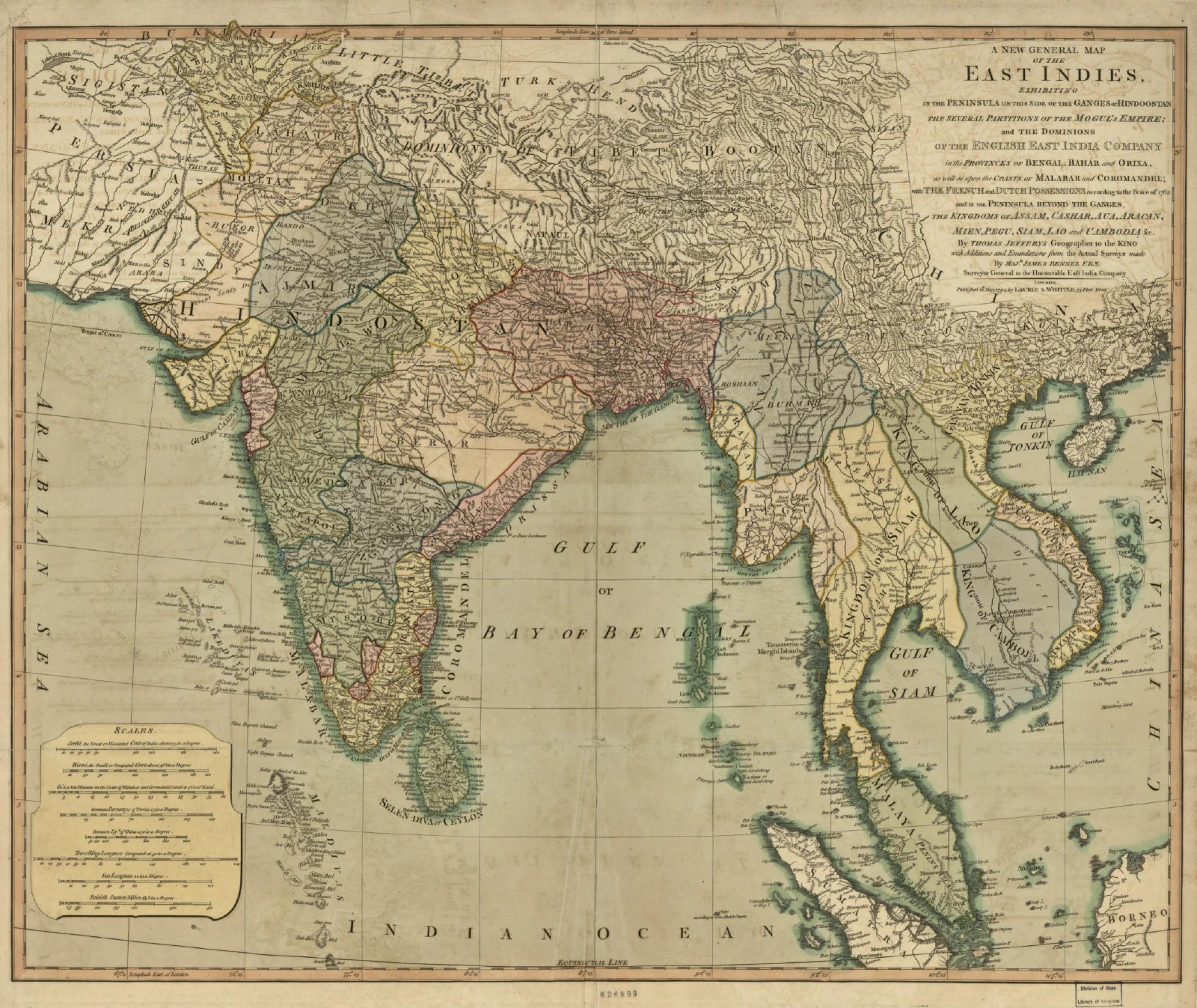
The first part of this history begins with the cities of the Indus Valley. It follows the ancient and medieval worlds of both north and south, the growth of the Persianate and maritime worlds, the East India Company’s transformation from merchant to ruler, and the movements that ended British rule. It closes in 1947, when Independence arrived together with Partition.
The second part begins at that same moment. India inherited borders still being drawn, hundreds of princely states, millions of displaced people, and a constitution not yet written. The history of the republic is the history of how those pieces were assembled, and of the arguments over democracy, citizenship, caste, religion, development, and federal power that remain unsettled.
The history section supports three ways of reading. Origins to Independence and The Republic form a continuous two-part narrative, beginning with the Indus cities and carrying the story through the making and remaking of the republic. The focused essays slow down where that narrative must compress: the Indus world and debates over migration; the Mauryan, Kushan, and Gupta centuries; early medieval regional states, agrarian expansion, temples, monasteries, and new literary languages; southern India’s long literary, maritime, and imperial history; the Delhi Sultanate, Mughal empire, Marathas, and successor states; Company conquest and Crown rule; the rebellion of 1857; the many strands of the freedom movement; and Partition.
The cards are arranged roughly chronologically, with The South marked in parallel because it spans periods covered elsewhere. Decisive Dates is the third route: a compact reference timeline across the whole span, including the republic.
-
c. 7000–1300 BCE
The Indus Valley
The largest Bronze Age civilization by area, with no palaces, no royal tombs, and a script nobody can read.
-
c. 2600 BCE–1947
Origins to Independence
Indus cities, ancient and medieval worlds, colonial rule, the freedom movement, and Partition.
-
c. 600 BCE–650 CE
Ancient Empires
The second urbanization, the first subcontinental empire, an emperor recovered through his inscriptions, and the invention of a golden age.
-
c. 650–1200
Early Medieval India
Regional states, agrarian expansion, monasteries and temples, new literary languages, and the Indian Ocean trade between the age of Harsha and the Delhi Sultanate.
-
c. 300 BCE–1646, in parallel
The South
Roman gold, Tamil poetry, village committees selected by lot, a navy that crossed the Bay of Bengal, and an empire whose ruins cover twenty-six square kilometers.
-
1206–1857
Sultanate & Mughals
Six centuries of Persianate rule, an emperor who staged interfaith debates, another who is still being argued about, and a decline that was not simply decay.
-
1600–1858
The Company & the Raj
How a joint-stock company with shareholders in London acquired the tax revenues of Bengal, and what it did with them.
-
1857–1858
1857
Mutiny, revolt, or first war of independence: what you call it is an argument about what it was, and it has been running since it ended.
-
1858–1947
The Freedom Movement
Six decades from a loyalist petitioning society to a mass movement, and a serious argument about which part of it actually made the British leave.
-
1940–1948
Partition
A border drawn in five weeks by a man who had never been to India, and the largest forced migration in human history.
-
1947–present
The Republic
What India built after 1947: a Constitution, a mass democracy, a developmental state, and a continuing argument over who the nation is for.
Decisive Dates
A timeline, from the mature Indus phase to the caste census scheduled for 2027.